 Fraunhofer Institute for Environmental, Safety and Energy Technology UMSICHT
Hamburg / October 20, 2026 - October 22, 2026
Production, storage, use: Our solutions for the hydrogen economy

Hydrogen Technology World Expo
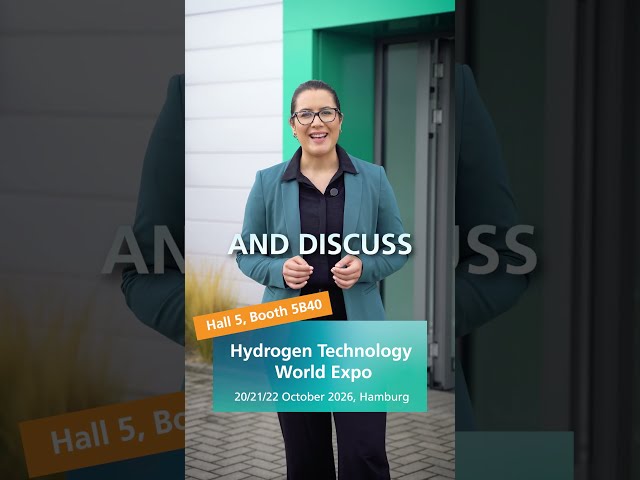
Hall 5, Booth 5B40
Hydrogen Technology World Expo
Hall 5, Booth 5B40
When the hydrogen industry gathers in Hamburg from October 20 to 22, 2026, we’ll be there. At the joint booth of the MAT4HY.NRW (Materials for Future Hydrogen Technologies) cooperation platform, we’ll provide insights into our research and solutions across the entire hydrogen value chain – from electrochemical production through storage, transport and use to the further processing of green hydrogen. This year’s focus areas: PEM/AEM electrolysis, ammonia as a hydrogen carrier, CO2 electrolysis, innovative fuel cell and electrolysis stacks, and measurement technology for hydrogen technologies.
Whether it’s material screening, scale-up, process optimization or validation: We support companies in the manufacture and testing of membrane electrode assemblies (MEAs). Our manual and semi-automated production processes enable the development and optimization of pastes and inks, as well as the processing of in-house, commercial or customer-supplied materials and are designed for scalable processes. In realistic tests, we characterize catalysts, membranes, electrodes, and transport layers under variable operating conditions and for various electrolysis concepts such as PEM, AEM or BPM, including degradation tests to assess stability and aging. In addition, modern analytical methods provide robust data for well-founded process and design decisions. As a result, companies benefit from customized, industrially scalable solutions, rapid implementation, and a reliable data basis with reduced development risk.
Ammonia is one of the most promising storage and transport carriers for hydrogen. In the form of ammonia, large quantities of hydrogen can be transported over long distances and stored for the long term. However, to establish a sustainable hydrogen economy, both ammonia production and hydrogen recovery must be made more efficient and climate-friendly. Fraunhofer UMSICHT is developing innovative technologies along the entire ammonia value chain to achieve this. The focus is on energy-efficient synthesis processes based on renewable energy, including electrochemical and plasma-based ammonia synthesis. In addition, we are working on solutions for the decentralized cracking of ammonia to supply hydrogen directly at the point of use and reduce transportation and storage costs. A key focus is on electrically heated reactor systems that heat catalyst beds particularly efficiently and enable ammonia cracking with low CO2 emissions.
Our services include the development of processes for the storage, transport, and conversion of hydrogen into derivatives such as ammonia, methanol, fuels or chemicals; the development of electrically heated reactor systems; catalyst development and testing; process engineering simulation and modeling; and the development of innovative plasma reactors.
Green hydrogen plays a key role in the defossilization of the chemical industry and the aviation sector. Together with CO2, it forms the basis for the production of sustainable chemicals and synthetic fuels. Our research and development work in the field of CO2 electrolysis lays the groundwork for converting renewable energy, CO2 and green hydrogen into sustainable chemicals and fuels.
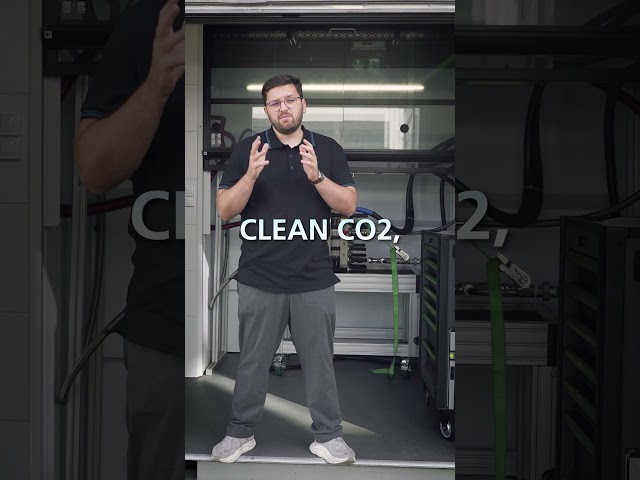
To this end, we investigate CO2 electrolysis systems on a laboratory and kilogram scale and evaluate their performance, scalability and economic viability under real-world conditions, including variable CO2 sources and potential impurities. At the component level, we analyze and optimize catalysts, electrodes and membranes specifically with regard to selectivity, energy efficiency, and long-term stability. In addition, we develop customized testing and development infrastructures – from test cells to automated stack test benches – and support companies from feasibility studies and techno-economic evaluations to scale-up support. Our proprietary technological approaches, such as high-pressure CO2 electrolysis or integrated capture-and-electrolysis concepts, expand the range of applications and provide a solid basis for decision-making while shortening development times and reducing investment risk.
Another focus is on an innovative, seal-free stack design for electrolyzers and fuel cells, specifically aimed at lowering production costs and increasing process robustness. This design is based on ultra-thin bipolar plates made of conductive, thermoplastic-based compounds, which are manufactured cost-effectively using a continuous roll-to-roll process. These enable stacks to be welded together and largely eliminate the need for traditional sealing elements, thereby reducing vulnerable sealing surfaces, lowering scrap rates, and significantly simplifying assembly processes. At the same time, the number of components and the effort required for assembly are reduced. In this way, the technologies developed make an important contribution to the economic use of hydrogen in electrolyzers and fuel cell systems.
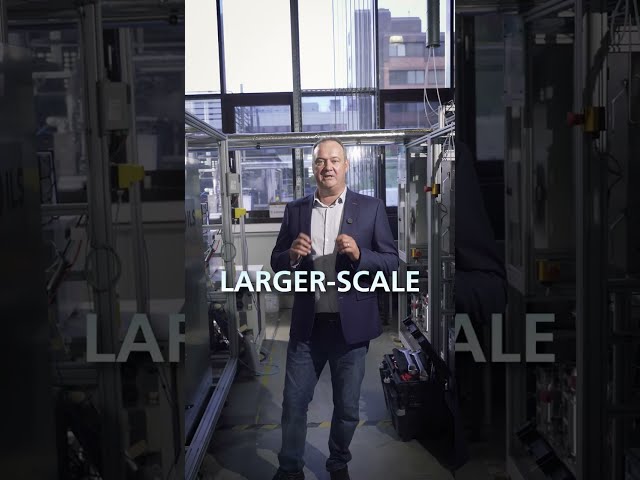
Maintaining and improving efficiency, quality and long-term performance are crucial prerequisites for the success of the hydrogen economy. With our unique laboratory and pilot plant infrastructure, we support companies in the characterization, development and qualification of materials, components and systems across the entire hydrogen value chain.
Our focus is on graphite-based composite bipolar plates, electrolyzers, catalyst materials and hydrogen storage and transport solutions. By combining thermal, physicochemical and mechanical testing methods with modern analytical techniques and high-resolution imaging, we create a robust data foundation for material and component development. Our infrastructure can be used for both individual research questions and complex development projects and helps companies bring technologies to market more quickly.
Our portfolio includes measurement techniques for the quality assurance of composite bipolar plates, measurement techniques for hydrogen storage materials and storage processes, analytical methods for determining the composition and microscopic structure of innovative materials and electrodes and test benches for the qualification of electrolysis and fuel cell technologies.
Stop by and learn how our solutions accelerate the entire hydrogen value chain and make the industrial implementation of hydrogen technologies more efficient. We look forward to discussing this with you at booth 5B40.
Clara Watermann
Kevinjeorjios Pellumbi
Kai Girod