 Fraunhofer Institute for Environmental, Safety and Energy Technology UMSICHT
Position paper
The use of light and plasma allows chemical reactions to take place at lower temperatures and pressures
The potential of light- and plasma-induced catalysis for sustainability, energy efficiency, competitiveness, and economic sovereignty is enormous: The technology promises breakthroughs for the chemical and pharmaceutical industries as well as the recycling and energy sector. This is the conclusion reached by Fraunhofer researchers from the "Light & Surfaces," "Materials," and "Resource Technologies and Bioeconomy" networks, including UMSICHT research scientist Dr. Tim Nitsche. Their findings can be read in the position paper "Light- and Plasma-Induced Catalysis."
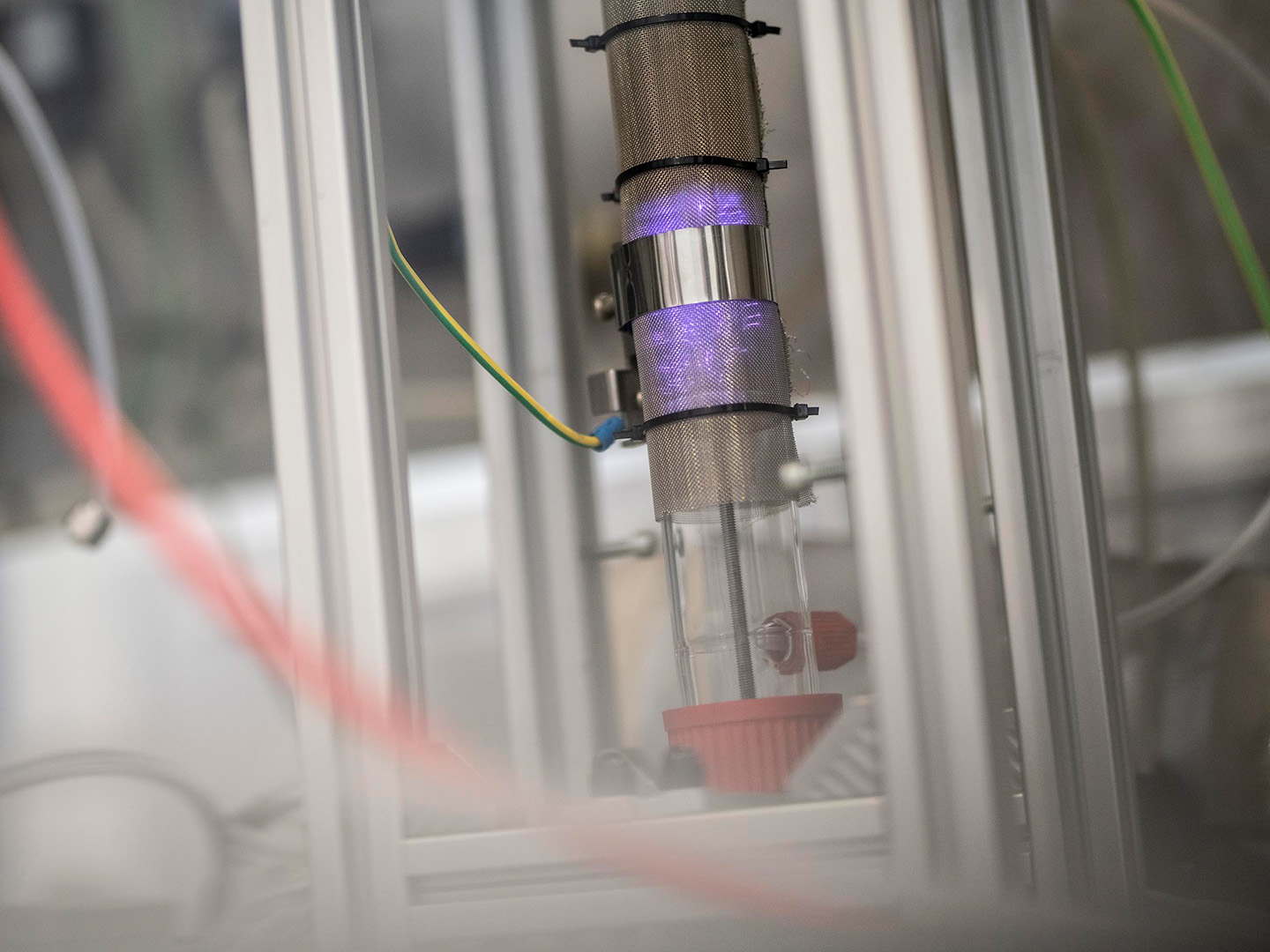
The central message of the paper: Through the targeted use of light and plasma, chemical reactions can take place at significantly lower temperatures and pressures – thus requiring far less energy and protecting the environment at the same time. The chemical and pharmaceutical industries, as well as the recycling and energy sector can benefit from this in the form of more efficient processes, lower energy costs, and new value chains.
Specifically, the researchers list the following societal potentials:
- Energy Sector: Light- and plasma-induced catalysis increases efficiency in the generation, storage, transport, and use of renewable energies.
- Chemical Industry: Light and plasma can be used to break down and convert CO2. This allows technically valuable gases such as carbon monoxide, hydrocarbons, and liquid fuels to be synthesized.
- Recycling and environmental management: Light- and plasma-induced processes enable, among other things, recycling without residual fractions and the elimination of poorly degradable pollutants such as fluorinated plastics or pharmaceuticals in wastewater.
- Pharmaceutical industry: In addition to the uncomplicated and reliable disinfection of surfaces – especially in hospital environments for infection prevention – and the promotion of wound healing through plasma technology, the light- and plasma-assisted production of personalized medicines opens up new possibilities for innovative and economically viable therapeutic approaches.
An example of an application from the context of Fraunhofer UMSICHT: In the Fraunhofer flagship project "AmmonVektor" a low-pressure Haber-Bosch process and plasma-assisted ammonia synthesis are under development. The objective is the sustainable and efficient production of ammonia, primarily for decentralized applications as an energy source of the future.
Against this backdrop, the researchers recommend measures in their position paper to stimulate the industrial application of light- and plasma-induced catalysis – from the launch of interdisciplinary research programs and the promotion of pilot and joint research projects to the establishment of competence centers, junior research groups, and a national data platform. Only in this way can existing fundamental knowledge find its way into industry and be integrated into existing production chains.
Last modified: